Are you interested in booking me as a speaker? Please! I generally have optimistic stories about the rise of digital technology and Artificial intelligence, but I’m not naïve. I also mention the possible threats. Would you like to see more about what I do as a speaker? Then have a look here and here. Do you have any further questions? Please do not hesitate to contact me. I also like to give international talks.
My book ‘De digitale butler – Kansen en bedreigingen van kunstmatige intelligentie’ [English: ‘The digital butler – opportunities and threats posed by artificial intelligence] has been in stores since October 2017.
Jarno Duursma – Author Digital technology – TEDx Speaker – Futurist.

Indeed, artificial intelligence will produce many sweet fruits for us as a society, but there are considerable concerns as well. This blog aims to offer a comprehensive overview of the risks of artificial intelligence.
12 risks of artificial intelligence Artificial intelligence is a subject that captures the imagination of many people. Of course, this is largely the result of the many Hollywood films that have appeared about this concept. You often see science fiction-like doom scenarios in Hollywood films. They are almost always exaggerated, yet an increasing number of alarming reports have appeared on artificial intelligence, fuelled by the qualitative growth spurt of this new technology. (Especially the qualitative improvement of machine learning and deep learning). Science fiction is becoming reality. This is because smart computer systems become increasingly adept at remembering and reading what we as people are capable of – this includes skills such as looking, listening or speaking. And they learn to discover patterns and rules from huge amounts of data. These systems easily have the upper hand in some areas. This has quite a few consequences.
Disruption In my view, Artificial Intelligence (AI) will be the most disruptive technology over the next decade. The quality of this technology has improved considerably in a number of areas in recent years, with all the consequences this entails. Smart software systems gain an ever better understanding of who we are, what we do, what we want and why we want it. A world full of opportunities opens up. Chatbots, smart virtual assistants and autonomous intelligence software assistants will increasingly come to our aid. AI systems will bring us prosperity, time savings, convenience, insights and comfort. We will become used to a personal assistant that is available 24 hours a day and knows what we need, before we know it ourselves. Just as it is difficult to imagine living without the Internet, a decade from now will see the same scenario in terms of your personal assistant.
Also, smart AI systems will provide us with insights that we believed would never be possible, and they will provide answers to questions the existence of which we were not aware of. AI systems are faster, are never tired, learn from examples and from each other and are considerably smarter than humans in specific domains. This is not a futuristic idea but reality.
Specific examples include the following: smart computer systems are better able to recognise art forgery than human experts. Another system is able to recognise dementia even before a medical specialist considers this option. An artificial intelligence system recognises skin cancer sooner than a medical professional, while another system is able to do something similar with nail fungus. Researchers from Stanford are able to predict voting behaviour in elections based on Google Street View images, while an algorithm that is fed data from the Apple watch is able to predict diabetes. Facebook knows when you are dating someone before you have manually indicated this on the platform. Amazon has a patent on ‘predictive shipping’, where they are able to send you a package before you know you want it. The predictive value of AI will be very extensive.
However, we cannot close our eyes to the potentially negative scenarios: President Putin of Russia recently said that the frontrunner in the field of artificial intelligence would be likely to become the leader of the world. And what to think of the AI system that claims to be able to say something about someone’s sexual orientation based on facial recognition technology? How should we deal with this kind of new technology?
It is therefore sensible to have a close look at a potentially powerful technology such as artificial intelligence: this should include both the positive and the less positive sides. Here we go.
12 risks of artificial intelligence 1. A lack of transparency Many AI systems were built with so-called neural networks serving as the engine; these are complex interconnected node systems. However, these systems are less capable of indicating their ‘motivation’ for decisions. You only see the input and the output. The system is far too complex. Nevertheless, where military or medical decisions are involved, it is important to be able to trace back the specific data that resulted in specific decisions. What underlying thought or reasoning resulted in the output? What data was used to train the model? How does the model ‘think’? We are currently generally in the dark about this.
2. Biased algorithms When we feed our algorithms data sets that contain biased data, the system will logically confirm our biases. There are currently many examples of systems that disadvantage ethnic minorities to a greater degree than is the case with the white population. After all, when a system is fed discriminatory data, it will produce this type of data. Garbage in, garbage out. And because the output is from a computer, the answer will tend to be assumed to be true. (This is based on the so-called automation bias, which is the human tendency to take suggestions from “automated decision-making systems” more seriously and ignore contradictory data created by people, even if it is correct). And when discriminatory systems are fed new discriminatory data (because that is what the computer says) it turns into a self-fulfilling prophecy. And remember, biases are often a blind spot.

Companies still have too little expertise at their disposal to be able to properly assess these data sets and filter out any assumptions and biased data. The most vulnerable groups are disadvantaged by these systems even more than usual. Inequality will increase. In the worst-case scenario, algorithms will choose the winners and the losers. It is similar to the talking sorting hat from the Harry Potter film: nobody knows exactly what happens inside, but you will just have to accept the truth.
Nonsense? Many convicts have been sentenced by a non-transparent and technically incorrect system, while predictive policing disadvantages the vulnerable in society.
And how can we ascertain that our data sets (on which we rely to an ever greater extent) are not contaminated on purpose by hostile governments or other parties with malicious intent?
In short, we will have to avoid ending up in a ‘computer says no’ society to an ever greater extent, where people rely too much on the output of smart systems without knowing how the algorithms and data achieved their result.
3. Liability for actions A great deal is still unclear about the legal aspects of systems that become increasingly smart. What is the situation in terms of liability when the AI system makes an error? Do we judge this like we would judge a human? Who is responsible in a scenario in which systems become self-learning and autonomous to a greater extent? Can a company still be held accountable for an algorithm that has learned by itself and subsequently determines its own course, and which, based on massive amounts of data, has drawn its own conclusions in order to reach specific decisions? Do we accept an error margin of AI machines, even if this sometimes has fatal consequences?

4. Too big a mandate The more smart systems we use, the more we will run into the issue of scope. What is the extent of the mandate we give our smart virtual assistants? What are and aren’t they allowed to decide for us? Do we stretch the autonomy of smart systems ever further or should we stay in control of this at any cost, such as is preferred by the European Union? What do and don’t we allow smart systems to determine and implement without human intervention? And should a preview function perhaps be installed in smart AI systems as standard? The risk exists that we transfer too much autonomy, without the technology and preconditions being fully developed, and without us remaining aware over time where we have outsourced the relevant tasks and for what reason. Indeed, there is a risk that we increasingly end up in a world we no longer understand. We must not lose sight of our interpersonal empathy and solidarity as there is a real risk we leave difficult decisions (e.g. employment dismissal) to ‘smart’ machines too easily because we consider this to be too difficult ourselves.
5. Too little privacy We create 2.5 quintillion bytes of data each day (which is 2.5 million terabytes, where 1 terabyte is 1,000 gigabyte). Of all digital data in the world, 90 per cent has been created in the last two years. A company requires substantial amounts of pure data to allow for the proper functioning of its smart systems. Apart from high-quality algorithms, the strength of an AI system also lies in having high-quality data sets at one’s disposal. Companies that are involved in artificial intelligence are increasingly turning into Greedy Gus when it comes to our data: it is never enough and anything is justified to achieve even better results. The risk, for example, is that companies create an ever more clearly defined profile of us with ever greater precision, and that these resources are also used for political purposes.
The result is that our privacy is being eroded. However, when we subsequently protect our personal privacy, said companies will simply use similar target groups; people that look very much like us. And our data is resold en masse, with an increasing loss of awareness as to who receives it or for what purposes it is being used. Data is the lubricating oil of AI systems and our privacy is at stake in any event.
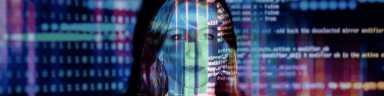
And not unimportantly: technology will have eyes to see. Cameras can easily be fitted with facial recognition software. Our gender, age, ethnicity and state of mind can be measured with smart software. This is not the future, this type of software already exists. A dynamic advertising billboard in the Dutch city of Utrecht was switched off because the spy software installed on these billboards had given rise to public outrage. Face, voice, behaviour and gesture analysis also results in ever more clearly defined profiles. The use of smart cameras allows for real-time profiling. Smart systems are better able to determine our state of mind than our partner or family members. This is not something from the future: this already exists. And it is readily and generally available as open source software. The government is happy, businesses are happy. Bye privacy.
A number of these options have been introduced in China. Some police officers wear glasses with facial recognition technology featuring a database with facial pictures of thousands of ‘suspects’. However, bear in mind that you are easily labelled a suspect in China when you make certain political statements in public. A so-called social credit system already exists in China: a rating system where you are judged on the basis of certain behaviour. People with higher scores receive privileges. In addition, the country has a very extensive network of surveillance cameras with image recognition or facial recognition software.
Book Jarno as keynote speaker
6. Major tech companies exert a great deal of influence The issue above ties in with the power of major tech companies, namely Facebook, Microsoft, Google, Apple, Alibaba, Tencent, Baidu and Amazon. These eight tech companies have the financial capacity, the data and the intellectual ability to raise the quality of artificial intelligence enormously. The risk therefore exists that very powerful technology ends up in the hands of a relatively small group of commercial (!) companies. And the better the technology, the more people will start using it, the more effective the technology becomes, et cetera. This will give the big boys an ever greater advantage. The winner-takes-all mechanism of the Internet era also applies to data (data monopolies) and algorithms.

Also, the transfer of algorithms in so-called ‘transfer learning’ is becoming more and more effective. In this case, increasingly less data will be required for a good result. A system from Google, for example, had been offering quality translations from English to Spanish and Portuguese for a period of time. With the help of new transfer learning techniques, this system is now able to translate from Spanish to Portuguese and vice versa with very limited input. The major tech companies own the data and these transfer learning models.
Experience shows that the previously mentioned commercial objective will always dominate, and it remains to be seen how these companies will use the technology in the future.
7. Artificial superintelligence I personally believe the debate about the drawbacks of artificial intelligence is dominated a little too often by the discussion on superintelligence. The latter refers to systems with an intelligence that far surpasses human intelligence in several respects. As a result, they are able to acquire all manner of skills and expertise without human intervention, they can train themselves for situations unknown to them and are able to understand context. They are a kind of super intelligent oracle that only regards human beings as ‘snails in the garden’: as long as they do not bother you, they are allowed to live.
First of all, I believe we should take this scenario seriously and we should primarily focus on conveying our ethical morals to intelligent systems. In other words, we should not teach them rules set in stone, but something about human considerations. This is very important. It would be best if we provided them with a ‘conscience’, otherwise they would become anti-social personalities. What I intend to say is that I do not believe we will see even the slightest hint of a consciousness in these systems in the short term. The technology is far too young for this – if it is possible at all to create consciousness in these systems. It is therefore perfectly fine to reflect on it and we should really take superintelligence seriously, but there are certainly other risks at issue now.

Lest I forget, I would like to add a nuance here. I am not that concerned about a system endowed with any form of consciousness that will take over the world. But… we will probably be affected far more often by systems programmed with a certain objective that they intend to pursue relentlessly, without taking into account issues we consider to be important as humans, including empathy and social equality. Simply because they are programmed this way. Because what we consider to be important is their blind spot. And that is NOT science fiction.
Facebook is a ‘great’ example of how an artificial intelligence system can have a completely negative result. Indeed, increasingly smart Facebook algorithms only have one goal: keeping you on the platform for as long as possible. Creating maximum involvement with the content. Collecting clicks and reactions. But the system is insensitive to issues such as ‘the objective factual representation of matters’. Truth is unimportant because the system is only interested in the time you spend on the platform. Facebook does not care about the truth, with all the harmful consequences this entails.

8. Impact on the labour market AI will create pressure on the labour market in the years ahead. The rapid increase in the quality of artificial intelligence will ensure smart systems become far more adept at specific tasks. The recognition of patterns in vast amounts of data, the provision of specific insights and the performance of cognitive tasks will be taken over by smart AI systems. Professionals should closely monitor the development of artificial intelligence because systems are increasingly able to look, listen, speak, analyse, read and create content.
There are therefore certainly people with jobs in the danger zone who will quickly have to adapt. However, the vast majority of the population will work with artificial intelligence systems. And remember: many more new jobs will be created, although it is more difficult to conceive of them than the jobs that get lost. Social inequality will increase in the years ahead as a result of the divide between the haves and the have-nots. I believe we as a society will have to look after the have-nots – the people who are only able to perform routine-based manual work or brainwork. We should remember that a job is more than just the salary at the end of the month. It offers a daytime pursuit, a purpose, an identity, status and a role in society. What we want to prevent is that a group of people emerge in our society who are paid and treated as robots.
In short, it is becoming increasingly important for professionals to adapt to the rapidly changing work environment. Moore’s law ensures there will be an ever greater distance between humans and machines.
9. Autonomous weapons As recent as this summer, Elon Musk from Tesla warned the United Nations about autonomous weapons, controlled by artificial intelligence. Along with 115 other experts, he pointed to the potential threat of autonomous war equipment. This makes sense: it concerns powerful tools that could cause a great deal of damage. It is not just real military equipment that is dangerous: considering technology is becoming increasingly easy, inexpensive and user-friendly, it will become available to everyone… including those who intend to do harm. One thousand dollars will buy you a high-quality drone with a camera. A whizz-kid could subsequently install software on it which will enable the drone to fly autonomously. Artificial intelligence facial recognition software is available as early as now, which enables the drone camera to recognise faces and track a specific person. And what if the system itself starts making decisions about life and death, as is the case now in warzones? Should we leave this to algorithms?
And it is only a matter of time before the first autonomous drone with facial recognition as well as a 3D-printed rifle, pistol or other gun becomes available. Check this video from Slaughterbots to get an idea of this. Artificial intelligence makes this possible.

10. Everything becomes unreliable – e.g. fake news and filter bubbles Smart systems are becoming increasingly capable of creating content – they can create faces, compose texts, produce tweets, manipulate images, clone voices and engage in smart advertising.
AI systems can turn winter into summer and day into night. They are able to create highly realistic faces of people who have never existed.
Open source software Deepfake is able to stick pictures of faces on moving video footage. This therefore makes it seem on video as though you are doing something (which is not true and has not actually happened). (read my report on deepfakes here (Dutch)). Celebrities are already being affected by this because those with malicious intent can easily create pornographic videos starring these celebrities. Once this technology becomes slightly more user-friendly, it will be child’s play to blackmail an arbitrary individual. You could take a photo of anyone and make it into rancid porn. One e-mail would then be enough: “Dear XYZ, in the attached video file you play the starring role. In addition, I have downloaded the names and data of all your 1,421 LinkedIn connections and I would be able to mail them this file. Transfer 5 bitcoins to the address below if you want to prevent this.” This is known as Faceswap video blackmailing.

Artificial intelligence systems that create fake content also entail the risk of manipulation and conditioning by companies and governments. In this scenario, content can be produced at such speed and on such a scale that opinions are influenced and fake news is hurled into the world with sheer force – specifically targeted at people who are vulnerable to it. Manipulation, framing, controlling and influencing. Computational propaganda. These practices are reality now, as we have seen in the case surrounding Cambridge Analytica, the company that managed to gain access to data from 87 million Facebook profiles of Americans, using this data for a corrupt (fear-spreading) campaign to get President Trump in power. Companies and governments with bad intentions have a powerful tool in their hands with artificial intelligence.
What if a video surfaces featuring an Israeli general who says something about wiping out the Palestinians with background images of what seems to be waterboarding? What if we are shown videos of Russian missiles being dropped on Syrian cities accompanied by a voice recording of President Putin casually talking about genocide? Powder keg-> fuse-> spark-> explosion.
Please have a brief look at this fake video of Richard Nixon in order to gain an accurate impression of this.
And how do we prevent social media algorithms from providing us with ‘tailor-made’ services to an ever greater extent, thereby reinforcing our own opinions in a well where the echoes reverberate ever more strongly? How do we avoid a situation where various groups in society live more and more in their own filter bubble of ‘being right’? This allows for the creation of a growing number of individual filter bubbles on a massive scale, resulting in a great deal of social unrest.
Book Jarno as keynote speaker
And what should we think when it comes to ‘voice cloning’? It is now possible to simulate somebody’s voice with the help of software, even though the result is not yet perfect. However, the quality is improving all the time. Identity fraud and cybercrime are lurking risks. Criminals will have voicemail messages recorded by software with self-directed payment orders. This is social engineering (the use of deception to manipulate individuals into disclosing confidential or personal information that can be used for fraudulent purposes) through fake voice cloning cybercrime. And it’s a reality.
11. Hacking algorithms Artificial intelligence systems are becoming ever smarter and before long they will be able to distribute malware and ransomware at great speed and on a massive scale. In addition, they are becoming increasingly adept at hacking systems and cracking encryption and security, such as was recently the case with the Captcha key. We will have to take a critical look at our current encryption methods, especially when the power of artificial intelligence starts increasing even more. Ransomware-as-a-service is constantly improving as a result of artificial intelligence. Other computer viruses too are becoming increasingly smart by trial and error.
For example, a self-driving car is software on wheels. It is connected to the Internet and could therefore be hacked (this has already happened). This means that a lone nut in an attic room could cause a drama such as the one in Nice. I envisage ever smarter software becoming available, which can be used to hack or attack systems, and this software will be as easy to use as online banking is at the present moment.
In hospitals too, for example, more and more equipment is connected to the Internet. What if the digital systems there were hacked with so-called ransomware? This is software that is capable of blocking complete computer systems in exchange for a ransom. It is terrifying to imagine somebody creating a widespread pacemaker malfunction or threatening to do so.

12. Loss of skills We lose more and more human skills due to the use of computers and smartphones. Is that a pity? Sometimes it is and sometimes not. Smart software makes our lives easier and results in a reduction in the number of boring tasks we have to perform – examples include navigating, writing by hand, mental arithmetic, remembering telephone numbers, being able to forecast rain by looking at the sky, et cetera. Not immediately of crucial importance. We are losing skills in daily life and leaving them to technology. This has been going on for centuries. Almost nobody knows how to make fire by hand anymore, for example. In my view, it is important to wonder the following: aren’t we becoming excessively dependent on new technology in this scenario? How helpless do we want to be in the absence of digital technology surrounding us?
And, not unimportantly: given smart computer systems will increasingly understand who we are, what we do and why we do it and will offer us a customised service: isn’t it an important human skill to tolerate frustration? To be patient? Or to settle for slightly less than ‘hyperpersonalised’?
In our work, we are increasingly assisted by smart computer systems that can read emotions and the state of mind of third parties – this is already the case in customer service, for example, while experiments are being conducted in American supermarkets. To what extent are we losing the skill to make these observations ourselves and to train our antennas? Will we ultimately become less adept at reading our fellow human being in a physical conversation?
This is already the case to an extent, of course, because we increasingly use our smartphone in our communications. Has this made us less good at reading our conversation partner in a face-to-face conversation? In short, which of our skills, both in a practical and emotional sense, do we want to leave to smart computer systems? Are attention, intimacy, love, concentration, tolerance of frustration and empathy aspects of our lives which we are willing to have taken over by technology to an ever greater extent?…
In this respect, AI is a double-edged sword as a technological development: it is razor-sharp, both in terms of the potentially positive and potentially negative outcome.
Have I overlooked something or are you interested in a lecture on the benefits and/or drawbacks of artificial intelligence? Feel free to contact me.
Book Jarno as keynote speaker
[출처] https://jarnoduursma.nl/blog/the-risks-of-artificial-intelligence/
저를 연사로 예약하고 싶으십니까? 부디! 저는 일반적으로 디지털 기술과 인공 지능의 부상에 대한 낙관적 인 이야기를 가지고 있지만 순진하지는 않습니다. 또한 가능한 위협에 대해서도 언급합니다. 제가 연사로서하는 일에 대해 더 알고 싶으십니까? 그럼 여기 와 여기를보세요 . 추가 질문이 있습니까? 주저하지 말고 저 에게 연락 하십시오. 나는 또한 국제적인 대화를하는 것을 좋아합니다.
내 책 '디지털 집사-인공 지능의 기회와 위협'[영어 : ' 디지털 집사-인공 지능이 제기하는 기회와 위협 ]은 2017 년 10 월부터 출간 되었습니다.
Jarno Duursma – 저자 디지털 기술 – TEDx 연사 – 미래 학자.
실제로 인공 지능은 우리 사회에 많은 달콤한 열매를 맺을 것이지만 상당한 우려도 있습니다. 이 블로그는 인공 지능의 위험에 대한 포괄적 인 개요를 제공하는 것을 목표로합니다.

인공 지능의 12 가지 위험 인공 지능은 많은 사람들의 상상력을 사로 잡는 주제입니다. 물론 이것은 대부분이 개념에 대해 등장한 많은 할리우드 영화의 결과입니다. 할리우드 영화에서 공상 과학 소설과 같은 운명 시나리오를 자주 볼 수 있습니다. 거의 항상 과장되어 있지만,이 새로운 기술의 질적 성장에 힘 입어 인공 지능에 대한 놀라운 보고서가 점점 더 많이 나타났습니다. (특히 머신 러닝과 딥 러닝의 질적 개선). 공상 과학 소설이 현실이되고 있습니다. 이는 스마트 컴퓨터 시스템이 사람들이 할 수있는 것을 기억하고 읽는 데 점점 더 능숙 해지기 때문입니다. 여기에는보기, 듣기 또는 말하기와 같은 기술이 포함됩니다. 그리고 그들은 엄청난 양의 데이터에서 패턴과 규칙을 발견하는 법을 배웁니다. 이러한 시스템은 일부 영역에서 쉽게 우위를 차지합니다. 이것은 몇 가지 결과를 가져옵니다.
붕괴 제 생각에 인공 지능 (AI)은 향후 10 년 동안 가장 파괴적인 기술이 될 것입니다. 이 기술의 품질은 최근 몇 년 동안 여러 분야에서 상당히 개선되었으며, 이에 수반되는 모든 결과가 있습니다. 스마트 소프트웨어 시스템은 우리가 누구인지, 무엇을하고, 무엇을 원하는지, 왜 그것을 원하는지 더 잘 이해합니다. 기회가 가득한 세상이 열립니다. 챗봇, 스마트 가상 비서 및 자율 지능 소프트웨어 비서가 점점 더 많은 도움을받을 것입니다. AI 시스템은 우리에게 번영, 시간 절약, 편리함, 통찰력 및 편안함을 가져올 것입니다. 우리는 하루 24 시간 이용 가능한 개인 비서에 익숙해지고 우리가 스스로 알기 전에 우리에게 필요한 것이 무엇인지 알 것입니다. 인터넷없이 사는 것은 상상하기 어려운 것처럼
또한 스마트 AI 시스템은 우리가 결코 불가능할 것이라고 믿었던 통찰력을 제공하고, 우리가 알지 못했던 질문에 대한 답변을 제공 할 것입니다. AI 시스템은 더 빠르고 피곤하지 않으며 예제와 서로에게서 배우며 특정 영역의 인간보다 훨씬 더 똑똑합니다. 이것은 미래의 생각이 아니라 현실입니다.
구체적인 예는 다음과 같습니다. 스마트 컴퓨터 시스템은 인간 전문가보다 예술 위조를 더 잘 인식 할 수 있습니다. 다른 시스템은 의료 전문가가이 옵션을 고려하기 전에도 치매를 인식 할 수 있습니다. 인공 지능 시스템은 의료 전문가보다 더 빨리 피부암을 인식하는 반면 다른 시스템은 손톱 곰팡이와 비슷한 일을 할 수 있습니다. 스탠포드의 연구원은 Google 스트리트 뷰 이미지를 기반으로 선거에서 투표 행동을 예측할 수 있으며, Apple 워치에서 데이터를 제공하는 알고리즘은 당뇨병을 예측할 수 있습니다. Facebook은 플랫폼에 수동으로이를 표시하기 전에 누군가와 데이트하는시기를 알고 있습니다. 아마존은 '예측 배송'에 대한 특허를 보유하고 있으며, 사용자가 원하는지 확인하기 전에 패키지를 보낼 수 있습니다. AI의 예측 가치는 매우 광범위합니다.
그러나 우리는 잠재적으로 부정적인 시나리오에 눈을 감을 수 없습니다. 러시아의 푸틴 대통령은 최근 인공 지능 분야의 선두 주자가 세계의 리더가 될 것이라고 말했습니다. 그리고 얼굴 인식 기술을 기반으로 누군가의 성적 지향에 대해 말할 수 있다고 주장하는 AI 시스템에 대해 어떻게 생각할까요? 이런 종류의 신기술을 어떻게 처리해야합니까?
따라서 인공 지능과 같은 잠재적으로 강력한 기술을 면밀히 살펴 보는 것이 합리적입니다. 여기에는 긍정적 인 측면과 덜 긍정적 인 측면이 모두 포함되어야합니다. 여기 있습니다.
인공 지능의 12 가지 위험 1. 투명성 부족 많은 AI 시스템은 엔진 역할을하는 소위 신경망으로 구축되었습니다. 이들은 복잡하게 상호 연결된 노드 시스템입니다. 그러나 이러한 시스템은 결정에 대한 '동기 부여'를 나타내는 능력이 떨어집니다. 입력과 출력 만 볼 수 있습니다. 시스템이 너무 복잡합니다. 그럼에도 불구하고 군사적 또는 의료 적 결정이 관련된 경우 특정 결정을 내린 특정 데이터를 추적 할 수 있어야합니다. 어떤 근본적인 생각이나 추론이 결과를 가져 왔습니까? 모델 학습에 사용 된 데이터는 무엇입니까? 모델은 어떻게 '생각'합니까? 우리는 현재 이것에 대해 일반적으로 어둠 속에 있습니다.
2. 편향된 알고리즘 편향된 데이터가 포함 된 알고리즘 데이터 세트를 제공 할 때 시스템은 편향을 논리적으로 확인합니다. 현재 백인 인구의 경우보다 소수 민족에게 불리한 제도의 많은 예가 있습니다. 결국 시스템에 차별적 인 데이터가 제공되면 이러한 유형의 데이터가 생성됩니다. 쓰레기가 들어오고 쓰레기가 나옵니다. 그리고 출력이 컴퓨터에서 나왔기 때문에 대답은 사실로 간주되는 경향이 있습니다. (이는 이른바 자동화 편향에 기반합니다. 이는 "자동화 된 의사 결정 시스템"의 제안을 더 진지하게 받아들이고 정확하더라도 사람들이 만든 모순적인 데이터를 무시하는 인간의 경향입니다). 그리고 차별적 시스템에 새로운 차별적 데이터가 제공되면 (컴퓨터가 말하는 것이기 때문에) 자기 충족적인 예언으로 바뀝니다. 그리고 기억하세요.
기업은 여전히 이러한 데이터 세트를 적절하게 평가하고 가정과 편향된 데이터를 필터링 할 수있는 전문 지식이 너무 적습니다. 가장 취약한 그룹은 평소보다 훨씬 더 이러한 시스템에 의해 불이익을받습니다. 불평등이 증가 할 것입니다. 최악의 시나리오에서 알고리즘은 승자와 패자를 선택합니다. 그것은 Harry Potter 영화의 말하는 분류 모자와 비슷합니다. 아무도 내부에서 일어나는 일을 정확히 알지 못하지만 진실을 받아들이면됩니다.
무의미한 말? 많은 죄수들은 불투명하고 기술적으로 잘못된 시스템에 의해 형을 선고 받았지만, 예측 치안은 사회의 취약한 사람들에게 불리하게 작용합니다.
그리고 우리가 더 많이 의존하는 데이터 세트가 악의적 인 의도를 가진 적대적인 정부 나 다른 당사자에 의해 의도적으로 오염되지 않았는지 어떻게 확인할 수 있습니까?
요컨대, 우리는 사람들이 알고리즘과 데이터가 어떻게 결과를 얻었는지 알지 못하고 스마트 시스템의 출력에 너무 많이 의존하는 '컴퓨터가 아니오'사회로 끝나는 것을 피해야 할 것입니다.
3. 행동에 대한 책임 점점 더 스마트 해지는 시스템의 법적 측면에 대해서는 여전히 많은 부분이 불분명합니다. AI 시스템이 오류를 범했을 때 책임 측면에서 어떤 상황입니까? 우리는 인간을 판단하는 것처럼 이것을 판단합니까? 

